Showing posts with label essential oils. Show all posts

7.06.2011

Aromatherapy & the Heart Chakra

Aromatherapy has so many uses, among them the ability to help you align and balance your chakras.

If you are familiar with the chakras, you probably are aware that the heart chakra is a very important chakra to keep aligned and balanced.  This is because it is the point connecting your lower chakras (which focus on physical needs) with your higher chakras that govern spirituality and your mental & emotional state.  When this chakra is out of balance, it can cause a definite disconnect between the two, leaving you feeling abit lost and alone. 

The heart chakra (Anahata in Sanskrit) is located, you guessed it, in the center of your chest, around the point where your heart is.  It is responsible for regulating your circulatory, pulmonary, and immune systems.  This chakra is connected to the element of air, and is often associated with the color pink or green.  It is often believed that there are 2 sub-chakras associated with the heart chakra as well, each about 3/4 of the way between your heart chakra and each armpit.  When connected, these form a triangle, often considered a symbol of any and all associations with trinity. 

When the heart chakra is balanced, you radiate love, acceptance, warmth and generosity.  You easily give and receive love, and are generally happy & content.  Further, it is considered to be where the voice of your soul sits, and where your core truths can be found.  If your heart chakra is balanced, you likely know what you want in life and have a plan to go after it.

When unbalanced, you may appear jealous, indifferent, lonely, needy, and demanding.  You may also exhibit fear, dispair, condemnation, envy, and greed.  Often, when our heart chakra(s) are unbalanced, we are blocking ourselves from being able to receive or give love of any kind.  We pretend that we don't need other people, which is contrary to our makeup.  As humans, we are considered a pack species, meaning we need others to survive.

Aromatherapy can be very useful in helping to balance the love of self and others, ease any kind of heartache, and help to resolve emotional issues.  If you are looking to balance love, some useful essential oils are rose, palmarosa, neroli, elemi, rosewood, chamomile, ylang ylang, and jasmine.  Most of these oils are associated with love and the heart because they help to open the heart chakra and clear any blockages. 

To ease heartache you may have suffered and are holding on to, you will find lavender, neroli, rose, chamomile, and ylang ylang very useful.  Lavender, especially, is renowned for easing stress and tension; it can help you to not feel so much loss as well.  Ylang ylang is said to help you realize more self-love, which is generally helpful in situations where a loss has occurred.

If there are other emotional issues at play, I would recommend working with peppermint (uplifting), rosemary, rose and sandalwood.  Sandalwood is wonderfully grounding and will help you to see the situation from a more down-to-earth perspective, which should alleviate some of the emotions at play.

I recommend using any of the essential oils listed above during a mediation or ritual to promote heart chakra balance.  If you don't meditate or meditate regularly, you can always simply burn these oils in an oil burner in your home to help open your heart chakra in a more passive way as well.

One of the main "lessons" from the heart chakra is that we must love ourselves first before we can show love to others, or expect others to love us.  I encourage everyone to take the time out of their schedule to have some "you" time to keep yourself balanced and feeling healthy.  

Namaste - 

Candace 

6.15.2011

Aromatherapy & the Solar Plexus Chakra

Chakra balancing has become such a regular part of my routine that I don't always think about new ways to work with them and keep them healthy.  Aromatherapy is a great addition to your chakra balancing practice.  As we continue on in the series, we're taking a look at the solar plexus chakra today. 

The Solar Plexus is located in the abdomen area (think the center of your stomach), and governs the liver, stomach, pancreas, upper intestines, and adrenals.  This chakra is associated with the element of Fire and the colors yellow and/or gold, and thus a connection to the Sun.  Yellow is said to stimulate intelligence centers in the brain.  Often associated with purification, the Solar Plexus helps you to rid yourself of things that are holding you back and make room for new & different opportunities. 

This chakra is often considered as "the seat of the Godhead", because this is your personal power base; here, you stand in your truth & resonate with your Higher Self.  It is all about the self: the ego, development of personal power, self-awareness, and self-confidence.  If imbalanced, you may experience feelings of rejection, depression, fear, and discouragement.  This can all lead to self-esteem issues as well. 

As with the other chakras, you can use essential oils and aromatherapy to keep your chakras healthy and spinning in the right direction.  To improve or maintain a positive self-image, you'll find frankincense, rose, rosewood, sandalwood, chamomile, and rosemary very useful.  If you're looking for something that's more physically supportive, try any of the following: peppermint, black pepper, lavender, lemon, ginger, cardamom, fennel, or rosemary.  All of these oils help to support digestion. 

Are there other essential oils or aromatherapeutic sources you've found helpful when working with the Solar Plexus?  Please comment below and share with us!

Namaste - 

Candace 

5.24.2011

Aromatherapy & The Root Chakra

Earlier this month, I introduced the topic of chakras and how you can use aromatherapy to keep them cleared and balanced.  This week, we start looking at the chakras individually, and we'll begin with your Root chakra.

Muladhara, meaning "root chakra" in Sanskrit, is located at the base of the spine, and is associated with the color red and the element of Earth.  In reference to the body, this chakra is associated with all solid parts, such as teeth and bones, as well as the lower genitalia.  Spiritually, the root chakra connects us to the physical world and how we connect with the world at large and Mother Nature.  It is the foundation for all the other chakras to build on, and is the base for the storage of Kundalini energy.  

The root chakra is based on our need to have our basic needs (food, water, shelter) met, as well as our need for nurture and support.  It's also involved in our need to belong and survive;  humans have a high connection to tribal consciousness (the need to belong and be part of the group).  

When the root chakra is out of balance, it leads to insecurity, materialism, and greed.  Physically, it can also lead to anemia, fatigue, depression, lower back pain, & cold hands and feet.  In balance, we understand our connection to the earth, humanity, and the idea of "the greater good.  Our emotions are balanced, we're healthy, and we have a sense of security and an ability to trust.  

Use the following essential oils to keep the root chakra aligned, clear, and balanced:
  • Sandalwood, cypress, elemi, cedarwood, and rosewood help to align you with the earth's energies.
  • Frankincense, clary sage, rose, vetiver, patchouli and ylang ylang help to combat isolation. 
  • Thyme helps to reduce stress. 

If you have any questions about the root chakra, or additional information you'd like to share, please feel free to comment below!

Namaste :)

Candace
RedSunflower Designs

5.06.2011

Aromatherapy & Balancing Your Chakras

Many people have heard of chakras, and you may even have an in-depth knowledge of what chakras are.  I've recently launched a line of Chakra Balancing Aromatherapy Oil Blends, and I'll be posting a blog each week, talking about each of the chakras, what they do, ways to keep them balanced, etc.  

But today, I want to do an intro, so to speak.  

Chakra means "wheel" in Sanskrit, is the term used for a nerve bundle in certain locations throughout the body.  It is also thought to be energy centers running throughout the body.  While this has been known in Hinduism and many Eastern cultures for hundreds or thousands of years, this is now being recognized in Western medicine.  The first writings regarding chakras go back to approximately 1000 B.C., and are strongly based in Hinduism.  There are 7 primary chakras (Root, Sacral, Solar Plexus, Heart, Throat, Third Eye, & Crown), and 21 lesser chakras.  Each chakra is thought to resemble a colored wheel, that is constantly spinning clockwise, when balanced.  

Now that you know what chakras are, let's move on to how aromatherapy can help you keep them balanced.

From a holistic viewpoint, we as humans are not only a physical body.  We contain many energy fields, which is where the chakras come in.  In aromatherapy, essential oils have a vibrational quality.  They also have energetic frequencies just as we do.  It is on this energy frequency that the oils first attract us, long before we sense the aroma or it enters our limbic system.  
By introducing an essential oil into the energetic field, your aura's will automatically begin to attune
to the frequency of that oil or oil blend.

Next week, we'll go over the root chakra and keeping it balanced.  Have a great weekend!

Candace
RedSunflower Designs
http://www.redsunflowerdesigns.etsy.com

1.12.2011

Healing the Natural Way: Using Herbs & Essential Oils for Health

 I don't know about everyone else, but I came back from the holidays to an office full of people sniffling, sneezing, and coughing their heads off.  One of my goals this year (as "resolutions" seems to be a four-letter word to my subconscious mind) is to use natural healing methods as much as possible, and take a holistic approach to my healthcare.  For me, this means eating well, exercising, and getting enough sleep; while I generally eat pretty well, the other two are things I'm constantly striving to improve. 

With the pace of life today, though, we all experience stress and negativity that you can't always get away from no matter what you do, which leaves us open to illness.  We all know that you should drink plenty of fluids, get a full night's rest, and eat light meals.  But I want to share with you some ways, such as herbal tinctures, essential oils, and key foods to eat, to heal yourself naturally when you or a loved one falls ill.
  •  Eat plenty of protein. Carbs convert easily to sugar, and too much sugar production taxes your immune system. 
  • Lay off the caffeine.  Yes, much to my chagrin, this includes coffee.  The reasoning here is that caffeine in any form dehydrates your body, and at a time when you need to keep up on your fluids this can make you feel even more drained. 
  • Eat raw.  Fruits & veggies in their raw form contain the highest amounts of vitamins and minerals, which are lost to some degree cooking. 
  • Have a snowball fight.  Okay, so you don't have to do this.  But spending some time out in the cold will stimulate your thyroid gland, which can help relieve you of some of those blah feelings and make you feel more energized. 
  • Drink some echinacea tea; add alittle honey to coat your throat if you're coughing alot.  If you're a woman, add alittle red clover as it's good for your system. 
  • Chicken soup to the rescue.  Eating fresh chicken soup made with lots of onion, garlic, celery and carrots can provide your body with an additional antioxidant boost.  Also, this combo of veggies seems to pack an additional immune-boosting punch!
  • Get moving! Mild exercise, such as talking a leisurely walk in a park, etc, can actually be beneficial.  It gets your blood pumping, which will help your body to flush out any illness and toxins. 
  • Apply some oregano or cinnamon essential oil to the bottoms of your feet.  Be sure you've diluted them as both of these oils are considered "hot" oils and can burn and irritate the skin!!! Don't dilute with water, but with a base oil such as olive, almond, jojoba, or grapeseed oil.
  • Add a fresh lemon wedge to your glass of water. This is a great immune system boost. 
  • Peppermint or eucalyptus essential oils are both considered "cooling" oils and give you that tingly, refreshed feeling.  Use these diluted in either oil or in a salve; rub the oil/salve under your nose to help with congestion.  This can also help with lung issues, such as coughing.
  • Be sure to use Thieves.  This is an oil blend that originated during the Black Plague in France.  Thieves would apply this to their body in order to enter and rob the homes of those with the disease without getting sick themselves.   I have a Thieve's oil blend available in my Etsy shop. PLEASE NOTE: This is for external use only  If you're interested in finding out how to make Four Thieve's Vinegar, which is a tincture that you can take internally (and I recommend) you can get the recipe here. 
Stay healthy, and remember, nature's way is always the right way to take care of yourself. After all, that's where we came from ;)!

Candace 

12.03.2010

Aromatherapist Certification: Beneficial or Not?


Aromatherapy certification.  Worth it? Does it really mean anything, or is it just a nice thing to have on your wall?  There are currently no state licensure or regulatory boards for aromatherapy in the USA.  For those who simply wish to use the oils for their own purposes, or like me, use essential oils in your bath & body products and want to do so safely, is it worth getting the certification? 

There are two organizations that work to advance public knowledge and perception of aromatherapy as a valid healing technique.  These are NAHA and ARC. 

The National Association of Holistic Aromatherapy (NAHA) is an educational, nonprofit organization dedicated to enhancing public awareness of the benefits of true aromatherapy. NAHA is actively involved in promoting & elevating academic standards in aromatherapy education and practice for the profession.

The Aromatherapy Registration Council (ARC) are working towards NCCA accreditation, and completely independent from any membership body, organization, or educational facility, which means there are no conflicts of interest. Through them, you submit to a volunteer exam & register with their organization as an aromatherapist, so there is a directory.  

In order to take the exam, you must complete a minimum of a 200 hour Level 2 program in aromatherapy from a college or school that is in compliance with the current NAHA Educational Guidelines or anyone who could provide evidence of equivalent training (transcripts must be enclosed with Application), & file your Application for ARC Registration Examination in Aromatherapy along with the fee of $325.00 to sit the exam.  Once you pass the exam, you will receive a certificate from ARC, which is valid for 5 years. 


So How Do I Get Ready For the Exam?
There are SO many of these programs out there, and the costs range from $1,500.00 - $2,500.00 for the course.  My recommendation would be to check out the NAHA's approved schools list if interested in pursuing this.  

So, Is It Worth It?
Ultimately the decision has to be your own, and you have to decide if it's worth that amount of money to you, or if you can be disciplined enough to self-teach, and then take the exam on your own.  You don't have to do the course AND take the exam; it's just an option. You're certified after taking the course.

I hope everyone has found this useful.  If you've gotten your certification or are trying to decide about getting it, please leave a comment below and let me know your thoughts. Until then...

Candace

11.07.2010

Top Books for Working with Essential Oils & Aromatherapy

This week, I'm going to recommend a few resources for working with essential oils, for those that are interested in incorporating them into your everyday life. 

I haven't written a blog entry for a couple of weeks.  True, I've been busy, but more than that, I felt like I didn't have anything really new and important to write about.  I've done so many DIY recipes for homemade skincare in the last month, I wanted something different.   So I thought this would be a nice, fresh idea to get everyone back in the groove!

I have read & owned many books on essential oils, aromatherapy, using them for your home, etc.  But there are two books that I recommend above all others.  I've rarely found anything with information that isn't contained in these.  If you're looking to get a solid foundation and understanding of essential oils and aromatherapy, these are the two books you want to focus on.

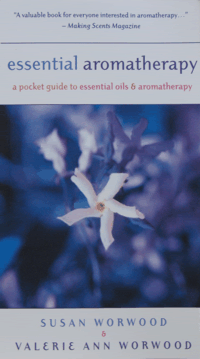
I LOVE this little book.  It's small enough to carry in your purse if you want to take this with you on a long trip, or for reading on the bus!  In this book, Susan & Valerie Ann Worwood go through the basics of what aromatherapy is, the methods of application for the oils, and what oils are useful for what.  It also notes how not to use the oils, which is very important, as some oils shouldn't be used on some people (namely children, pregnant women, etc).  I really can't recommend this book enough!


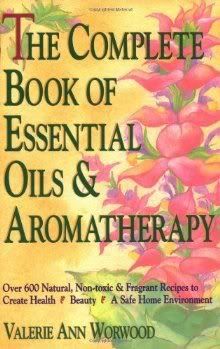
The first book I ever bought on aromatherapy and essential oils, I still consider this book my Essential Oil & Aromatherapy Bible!  This book is LOADED with great information!  She not only gives you the basics, like the various methods by which essential oils are extracted, but also oils and blends to use for the home, the office, physical ailments, stress & other emotional issues, hair care... the list goes on.  I highly recommend this book for anyone interested in starting out in aromatherapy!


I hope everyone finds this helpful!  If you have any questions or comments, please feel free.  Have a naturally fabulous week ;)!

Candace 

7.18.2010

INHALATIONS: USING ESSENTIAL OILS FOR HEALING

Happy Sunday!

So I've been under the weather for the past couple of days, and it's like a head cold/sinus something or other.  Whenever this happens to me, I always put together an inhalation using essential oils.  And since whatever I had seems to be going around, I thought I'd share with you guys what I personally do!  

So first, you need to get a large bowl (think large mixing bowl; I prefer using a glass bowl), a towel large enough to cover your head (hand towel or larger), boiling water, and your essential oils.  The essential oils to use are: eucalyptus, peppermint, rosemary, and thyme.  Basically, these will not only help to clear up your stuffy head, but help to boost your immune system, which you really need when you're sick. 

Once your water is boiling, take your bowl and put about 5-8 drops of each essential oil into the bottom of the bowl.  Find a place to sit where you can sit (at a table, on the floor, etc) and have the bowl in front of you.  Put the bowl wherever you'll sit, pour the hot water over the essential oils, put the towel over your head and lean over the bowl of hot water.  The hot water hits the essential oils, creating a steam that will loosen everything up, so you'll want to be sure you have tissue next to you.  Be sure you do NOT have your eyes open when leaning over the bowl, as the essential oils can and likely will burn your eyes.  You'll want to sit and inhale deeply over the bowl for 15-20 minutes ideally.  You can either set a timer, or I listen to music. 

You'll feel SO much better after this!  But what if you don't have all of these essential oils? You're not going to go out and spend $30-$40 just to have these if you won't use them for anything else, right?  I actually offer a Cough/Cold blend in my Etsy shop that will allow you to buy them in a slightly diluted form, in a smaller vessel, so you don't have to spend so much money. 

I hope you all find this useful, and here's to breathing through the nose :)!

Natural Blessings - 

Candace

7.04.2010

What Exacty is an Absolute?

Happy 4th of July everybody! 

I was recently asked "What is the difference between an essential oil, an absolute, and a fragrance oil?"  Since I already blogged about the difference between essential oils and fragrance oils, I'll focus on absolutes.  

An essential oil is a liquid that is generally distilled (most frequently by steam) from the leaves, stems, flowers, bark, roots, or other elements of a plant. These are oils that are naturally occuring in the plant, often referred to as the plant's essence (thus named "essential oils"). 

Absolute oils are natural oils extracted from flowers, leaves or bark. An absolute oil is not really an essential oil, it is an essence.  They have very high concentrations of fragrance and a little goes a long way.  Absolute oils are also generally more expensive to buy than essential oils, because the process of extraction is more difficult, time consuming, and expensive. 

Here are the "short & sweet" steps of extracting oils for absolutes:

  1. The botanicals are placed in drum together with a solvent mixture, usually alcohol or some other hydrocarbon such as hexane . The solvent is then allowed to be absorbed into the extract. Vacuum distillation is then applied to remove the solvent, leaving behind a material called a concrete or a resin.  Another method is through enfleurage:  The botanicals are placed in fats, allowing the fragrance to be absorbed into the fat over the space of a few days. This process is repeated until the fat is saturated with the desired density of fragrance.
  2. The concrete (or resin) is washed with alcohol to extract the aromatic compounds, after which it is distilled to leave behind the pure essence, the absolute oil.  There is now a new method of absolute oil extraction but it is very expensive - through the use of carbon dioxide. This carbon dioxide acts as a solvent which almost instantaneosly extracts the oil, and because of the low temperature, there is no heat damage to the oil. Due to the expense of this process, however, it is not yet widely used, but is the most natural method of extraction for absolute oils. 
I hope this helps everyone understand the difference between essential oils and absolute oils.  Keep in mind that absolute oils CAN be extracted without the use of chemicals, and you can now find those natural options, especially on the internet.  

Do you have experience working with absolutes?  What are your feelings about them? Let us know.

Candace 

6.27.2010

Make a Facial Scrub In Your Own Kitchen!

Happy Sunday everyone!  I hope everyone's out enjoying the sun & heat.  I don't want to take up your entire day, so today is another DIY recipe.  I thought I would give you a basic recipe for a facial (& body) scrub you can make simply with the ingredients you have in your kitchen.  So read on and enjoy!

You'll need:

  • 3-4 tbsp Brown sugar
  • 2 -4 tbsp of some kind of oil (you can use olive, etc but I recommend grapeseed if you have it)
  • 3-4 tbsp Oatmeal
  • 1/2 tsp honey
  • Botanicals (optional)
  • Essential oils (not necessary)
Take about 3-4 tablespoons of brown sugar, the oil (start with 2 tbsp or so, then add from there as needed), and honey, & combine in a small bowl.  Grind about 4tbsp oatmeal in a food processor or blender, and add this to the bowl.  You can now add any essential oils and/or botanicals you'd like.  Some people like to grind up alittle lavender or rose petals to add to it.  Tip: Vanilla essential oil (if you have it) is a great addition.  Very warm and comforting.   That's it!  Just mix to your desired consistency, then use as  gentle and completely natural scrub!  This recipe is enough for 1-2 uses as a facial scrub. 

Do you like when I give you recipes like this?  Is it helpful?  Let me know. Until next week..

Peace, Love, & Natural Blessings,

Candace

5.30.2010

Healing, The Way Nature Intended!

Happy Sunday all!

So last week, I said I was going to talk about the benefits of reservatrol for the skin. But I'm actually going to push that to next week's blog.  This week, I want to give something back.  I've always found folk remedies to be fascinating.  How did people back in the day figure out that a certain herb would help to heal a wound, or help with cramps, or cure a toothache?  I wish that I had learned more of these from my grandparents and great-grandparents when they were still around.  But I've learned through research, and personal trial & error, some of the ways we can use herbs and oils for healing, and that's what I'm discussing today. 

Lavender oil has so many uses, therapeutically speaking.  It's known for helping to calm us during periods of stress and anxiety, and is also known to help with depression.  It is also very useful as a bug repellent, and great for burns.  Not only will it help take the sting out of the burn, but lavender oil is a natural antiseptic/antibiotic, so it can help to prevent infection at the burn site as well. Many older French women keep a bottle of lavender oil in their kitchens for this very reason.  Additionally, lavender is one of the few essential oils that is safe to use "neat" on the skin, or without diluting. 

If you're looking to detox from a night out on the town in smoky bars, detox from stress, or just clear out your system, grapefruit oil is the way to go.  Whether it's pink or white grapefruit oil, it's great to help with muscle fatigue, and mental exhaustion.  It's tonic qualities make it perfect as part of any detox plan. One word of caution: grapefruit essential oil is highly concentrated, and thus, should always be diluted in a carrier oil for topical use.  You can also use this in an oil burner; this is a great way to reap the benefits if you're needing more of a mental vs physical detox.  Dispersing the scent of this oil by burning it will leave you feeling refreshed and restored.

Ginger has long been used for its medicinal properties for everything from nausea to colds & rheumatism.  Many cultures have used this remedy for hundreds, if not thousands, of years, because its application is so diverse.  For example, in Senegal (West Africa), tribal women will make belts of ginger to arouse their partners sexual interest ;)!  Ginger oil is most prized in the West for helping nausea.  This is why, if you have a stomach flu, you are often advised to drink ginger ale, as it will calm your stomach.  If you're just nauseous, however, you can use it easily as an inhalation.  Uncap the bottle, put it directly under your nose, and inhale deeply.  Do that for 2-3 breaths, and you should start to feel the nausea subside.  DO NOT use ginger oil neat; ginger, along with other spice oils, can be very irritating to the skin.  Always mix with a carrier oil, and then test a small area on your skin.  Some people, especially those with sensitive skin, may still not be able to use the oil topically. 

A great source for all of the oils mentioned here, as well as a plethora of others, is Mountain Rose Herbs .  Their quality is fabulous and I would recommend them to anyone.

I hope you've enjoyed learning a few ways to heal yourself with nature.  Next week, I'll walk about the benefits of reservatrol in skin care, as promised.  

Have a wonderful Memorial Day weekend everyone!  

Natural Blessings, 
Candace 

5.09.2010

Which Oils Should I Use?


Happy Sunday everyone!  

I apologize for how late I'm making this post. I cut my finger earlier in the day and I'm having a hard time typing. LOL

I was inspired recently while watching a friend's YouTube video to make a blog about the different types of carrier oils you can use when making your own essential oil blends and body products, and the benefits of each.  Here, I will discuss a few of the more popular options that are relatively easy to find at most health food stores and online stores such as Mountain Rose Herbs .  

Grapeseed oil Grapeseed oil is my all-time favorite.  It's light, with a fresh scent, and is very good for people with sensitive skin (such as myself!) as it is naturally non-allergenic.  This oil can go rancid (read = spoiled) quickly, so it's best to use this in at least a partial mix with another carrier oil to extend the shelf life of your product, or make your product in small amounts that you can quickly use.   It has a mild green tint to it, a silky smooth texture, and great absorption rate, so it won't leave you feeling oily or slick. Made from the skin of grapes, it is full of powerful antioxidants which help to fight cancer-causing free radicals we come in contact with on a daily basis.  It also contains alpha-hydroxy acid, which helps to prevent the appearance of fine lines and wrinkles, and is useful in helping to fade stretch marks. 

Apricot Kernel Oil Apricot kernel oil is another fabulous oil to use in blends.  It's ideal for people with sensitive and/or mature skin. The more golden the oil, the higher quality it tends to be.  I think it has a light, somewhat fruity odor (not strong, just a hint).  The apricot tree is the member of the rose family originating from Central and East Asia. The fruit, rich in vitamins is used to produce the pleasant smelling Apricot Kernel Oil. Apricot Kernel Oil is very mild natural oil, often used in baby products because of its gentle nature. Since it easily penetrates the skin, it's a good oil for mature, dry or irritated skin. The excellent softening & moisturizing properties make it great for the face, hands and hair.  It is also quite beneficial in soothing burns.

Sweet Almond Oil This is, hands down, one of the most widely used carrier oils today, due to its adaptability, neutral yet somewhat nutty scent, shelf life, and affordability.  It is great for all skin types, is best known for its ability to soften, soothe, and re-condition the skin due to its high content of fatty acids. With this said, it can be abit oily.  Normally, it is almost clear with a slight yellow tint.  This makes a perfect all-purpose carrier oil.  Almond oil application is the best therapy for conditioning the skin and reviving its natural glow. It is also known to improve the complexion and give a younger look to the person to whom this oil is applied.

Jojoba Oil This oil is the closest in chemical composition to the oils the human body products, and thus has the best absorption rate for use in body products.  Jojoba oil helps promote healing of the skin in many ways. It has antimicrobial properties, which means it actually discourages the growth of some bacterial and fungal microbes that attack the skin.  It's easy to find, very affordable, and extremely versatile.  Jojoba oil is actually not an oil at all, but rather a liquid plant wax!  This is good, because it acts as a natural barrier between the skin and environmental forces.  It also makes a great scalp cleanser ;)!

Olive oil Olive oil has been used for centuries in many cultures as nature's beauty cure-all.  It's wonderfully hydrating for the skin, and has many applications.   It should have a nice, bold aroma, and the color can range from a golden brown to almost green (generally found in extra virgin oils).  "Extra virgin" simply means it is the result of a single, simple pressing; it is considered the highest quality olive oil.  It is a great aid in preventing hair loss as well: Massage the scalp with olive oil every evening for eight days. Let it work overnight and wash it out in the morning. To help build strong fingernails & soften cuticles, soak your nails each night in a mixture of 3 parts lukewarm olive oil to 1 part freshly-squeezed lemon juice. Put on cloth gloves and let the oil penetrate overnight. Your nails will gradually become more resistant to breaking and chipping. 

This is not meant to be a complete list, just an overview.  I hope everyone has enjoyed learning about the differences, and hopefully this will help you decide which oils to use when making your own blends.  Visit again next Sunday to learn the difference between coconut oil and virgin/extra virgin coconut oil. Until then, Natural Blessings to all!

Candace
RedSunflower Designs

DDNYSJEV5N6T

4.18.2010

Why I Make Natural Bath & Body Products

Hello all, hope everyone is having a fabulous Sunday and wonderful weather :)!

So about a week ago I had posted a question on my Facebook page asking what everyone would like to see me blog about, and from the great questions I got, this week's blog was born.  I was asked how I came to be in this business, my passions, and what I like/dislike about being a business owner.  Since some of you may be new to my blog/Facebook/Twitter and business, I thought I would make this week's blog about how I got started making natural bath & beauty products. 

I've always has a preference for natural versus your standard commercial products.  As someone with very sensitive skin, I find that alot of the chemicals and preservatives used in commercially-produced products really irritate my skin.  And to be honest, I also tend to be really picky about things like consistency of products :P!  Another issue I often have with most products is the scent.  I have a pretty strong sense of smell, and because of that, often find that the scents used in perfumes & lotions are abit strong for me.  I like to smell nice, of course, but I don't like the whole "walk away and leave a scent trail thing".  You know when you talk to someone wearing a strong perfume, and for like 10 minutes after they leave, you still smell their perfume?  I'm not a big fan of that, personally. 

So, with all of this in mind, I decided one day to give it a try doing it myself, since I couldn't find anything that was natural, that was in my budget (I really can't justify spending $50 on creams, ya know?), and that was exactly the scent I was looking for.  Since I've been working with essential oils for various purposes for years, being able to blend these comes pretty naturally to me; this was the easy part. There was some definite tweaking of recipes for my lotion & body butter bases, with the first batch I ever attempted coming out very, um, firm (we're talking shellac, people).  After one or two rounds that did have to be tossed, I had it down.  

I keep a recipe book, so to speak, of my final formulas for all products.  I look at this as more of a base idea, as I'm always trying to improve my products, by adding in extra antioxidants or even changing out one ingredient for another if it's beneficial.  

Anyway, I hope this has given everyone an idea of how I got into the natural bath & beauty products game.  I love coming up with new blends and formulas, and am always working on new and different things, so check back often for new products!

If there are articles you would like to see in my blog, please feel free to leave a comment or post something to my Facebook page.  Also, leave a comment about this article, and let me know what you guys think!

Candace
RedSunflower Designs

4.11.2010

How Can I Know What's Natural & What's Fake???


Natural.  Synthetic.  Organic.  Free Range.  Certified.  

What does it all mean? Sometimes it's really hard to make the choice to buy natural, because there are so many companies out there that have products touting "100% natural", "made from natural ingredients", etc.  But when you look at what is actually being used in the products you buy, it's often anything but.  How is this possible? How can you really know what you're buying??? 

The first and most important step, is to really do your research.  Alot of commercially-made bath & beauty products use the same ingredients, so if you take the shampoo bottle out of the shower or look at what goes into your moisturizer, you'll find alot of the same ingredients listed.  I recommend looking up all the ingredients that you don't know what they are.  Sometimes they are natural, but often they are things that were "based" in natural ingredients.  What this means is that the origin came from a plant, for example, and was then often chemically altered in a lab. In my mind, this is no longer a natural ingredient.  Look up the names of those ingredients, and see what you can find out.  Doing this with just one or two of your products will help you to be better informed for your future purchasing choices.  

Since I use 100% pure essential oils in all of my products, I wanted to focus specifically on the difference between essential oils & synthetics (or fragrance oils), and give you a few tips as to how you can know if someone is telling you something is natural when it's not. Essential oils are steam-distilled (normally) from the herb, wood, flower, or resin, and are the oils that naturally occur in a plant.  Using essential oils means you get the benefits of the essence of plant, etc., many of which have medicinal properties.  Also, essential oils tend to be more costly than fragrance oils.  Rose essential oil,  for example, is well over $300 for 1/2 oz if it's true rose oil.  

In contrast, fragrance oils are simply that: they are oils created in a lab that are made to smell like various plants and other things.  While fragrance oils do exist in many of the same scents as essential oils, fragrance oils actually have a broader range.  What I mean is that not all plants will yield an essential oil.  So if you want to make something with these scents, you would have to use a fragrance oil. 

Some oils that you can find in fragrance oils, but not essential oils are: 
  • almond (can get an extract, but not an essential oil)
  • any fruit scent
  • coconut  (can get an extract, but not an essential oil)
  • lilac
  • lily of the valley
  • musk (more on this later)
  • plumeria
  • many of your "foodie" scents
I wanted to write about this today because there are many companies, both large & small, that try to claim their products are 100% natural, but use these scents, particularly the fruits.  As someone who works diligently to provide all natural ingredients in all of my products, and does ALOT of research to make this happen, it frustrates me when businesses claim their products are something they frankly are not.  

With my business, I don't believe in lying (let's be frank) to your customers about what you're using to make your products.  I don't like being told lies when I'm trying to live naturally, and I don't agree with lying to people trying to live naturally just to sell products. 

Happy Sunday to everyone :)!

Candace
RedSunflower Designs

4.04.2010

Welcome to RedSunflower Designs


Hello everyone, and welcome to my blog!

I made the decision to create a blog for my business a couple of weeks ago.  As a web-based business, I don't get to physically interact with my customers very often.  So, out of that came adding a page on Facebook, an account on Twitter, and YouTube videos.  But some things are just better conveyed in text.  Thus, a blog was born :)!  

I will be updating this blog once a week (on Sundays) to start.  Also, I'll be using this blog to share ideas, trends in the industry, and discuss the benefits of going natural & the importance of holistic living.  I hope everyone will join me in my journey, and post comments and suggestions along the way, as well as give me feedback on my products and customer service.  I aim to provide what my customers want, while maintaining the ideals I've built my business on.  I look forward to talking to everyone.  

Have a wonderful Easter if you celebrate, and a wonderful Sunday if you don't.  Until next week, Spring Blessings to all!!!