Showing posts with label hair. Show all posts

7.18.2011

Natural Beauty: DIY Hair Mask

Trying to find a good hair mask if you're vegan can be very difficult.  And the companies that do choose to not test on animals or include animal ingredients are usually substantially more expensive.  I'm not saying there aren't great products out there, but why pay the money if you can make it yourself at home, with things you likely already have?

Today, I'm going to show you a few ideas for making your own hair mask in your kitchen (don't worry, non of these take more than about 5 minutes, if that).  First up, a Coconut-Banana Deep Conditioner. 

To make this you'll need:
  • 2 1/2 tbsp virgin organic coconut oil
  • 1 small pureed banana (Be sure to get this pureed REALLY well; otherwise you'll end up with banana pieces in your hair, which I think we can all agree is kinda gross.)
Wash your hair with whatever shampoo you choose to use, and rinse.  Follow with your Coconut-Banana Deep Conditioner, letting it sit on your hair for 10-15 minutes.  Rinse, and follow with a small amount of shampoo again (just to be sure you get everything out).  You can then follow with another conditioner if you think you need it.  You'll be left with less frizz and a gorgeous sheen!

Maybe you're not someone who really likes coconut or banana.  Here are some other things you could use:
  • avocados
  • coconut milk
  • olive oil
  • almond oil
  • beer
  • apple cider vinegar can balance the pH in your hair. (Note: If you have any cuts or sensitive areas on your scalp, don't do this one.  It WILL burn.)
What are some other things that you've tried that have worked for you?  Please share with us in the comments, or leave me a question. 
Namaste - 

Candace 

7.11.2011

Natural Beauty: Virgin Coconut Oil

Coconut has long been used cooking and beauty.  In lands where the coconut tree grows, the coconut is a staple in the diet and is the most common food eaten. The coconut provides a nutritious source of meat, juice, milk, & oil that has fed and nourished populations around the world for many generations. Nearly one third of the world's population depends on coconut to some degree for their food and their economy.

Only recently have we really started to look at all the uses of coconut oil for beauty and use as a low-cost beauty product.  When buying coconut oil, I highly recommend choosing Organic Virgin Coconut oil versus a refined (read: more commercially available) coconut oil.  But what's the difference?

In the refining process, the coconut kernel is dried then put through a press to extract the oil.  This type of coconut oil process may appeal to you if you have an aversion to the smell of coconut, as refined coconut oil generally lacks the aroma or taste.  Virgin coconut oil, however, is extracted right from the fresh coconut meat, retaining that wonderful aromatic coconut scent and flavor.

If you complain about your hair being brittle and dull, virgin coconut oil could be very useful, as it's been found to be a very effective remedy to treat dry hair.  Coconut oil can be used as a natural moisturizing hair and scalp treatment, which can also help fight dandruff.  In fact, many have found coconut oil to be much more efficient than some anti-dandruff products available in the market.  

Coconut oil is solid at room temperature, so you'll need to put a small amount in your hand and allow the body heat to melt it to a liquid.  Keep in mind that less is definitely more here, particularly if you have fine, thin hair.  You can then proceed in several ways: 
  • Take the small amount (I'd start with maybe a dime-size amount if you have thin hair, closer to a quarter size if your hair is extremely thick) of melted coconut oil in your hand, and distribute it through you hair, concentrating on your scalp.  Allow this to sit on your hair for 15-20 minutes, and then shampoo/condition as normal.  (This is what I'd recommend for the baby fine ladies!)
  • If your hair needs abit more moisture, change up the method above with "shampoon/rinse/oil for 5 minutes/rinse/condition/rinse".  This will allow you to leave abit more of the oil in your hair, without weighing it down.
  • A small dab can be used to tame flyaways and smooth split ends.  To do this, take a VERY small amount (you can always add more as you go; too much coconut oil = really greasy looking) and lightly run your hands through your hair (flyaways) or over the ends.
  • For damaged hair, coconut oil can be used as as a deep conditioning hair mask. Heat the coconut oil for a few seconds, then gently work it though the hair and massage into the scalp. Coat hair with the warmed oil, using a wide-tooth comb to gently distribute the oil through the strands evenly, always starting from the ends and working your way up. Cover the hair with a shower cap, and sleep overnight, allowing the oil to soak into the hair. For those in a hurry, use a hair dryer on the mixture or wrap your hair in a warm towel as the heat helps the oil better penetrate the hair. Shampoo thoroughly and skip the conditioner, and enjoy your silky, radiant locks!
Coconut oil isn't only good for your hair, but also helps to keep your skin silky and supple.   It works to improve the condition of dry skin, and evens out skin tone.  Apply coconut oil after a bath (again, less is more) while skin is still wet, as this is when your pores are most open and can most readily accept moisture.

If you're looking for something natural and gentle to use on your child's unruly curls, coconut oil is also great, as it locks in moisture and helps to smooth the hair shaft.

Further skin-lovin' uses:
  • Rub a small amount into your cuticles as a nail treatment.  
  • Great for the scaly skin on elbows, knees, and feet.
  • Helps prevent premature aging & wrinkling of the skin
  • Helps protect against skin cancer & other blemishes
  • Helps with fungal infections like athlete's foot
  • Supports the natural chemical balance of the skin
  • Promotes healthy looking hair & complexion

Finally, if you have curly hair, particularly dry, kinky curly hair, coconut oil could be your new best friend.  Anyone with curly hair knows how hard it can be to find a product that works on your hair without drying it out or weighing it down.   

What other uses have you found for virgin coconut oil?  Please share your experiences and ideas in the comments below. 
Namaste - 

Candace 

7.11.2010

HOW TO MAKE INFUSED OILS

Happy Sunday!

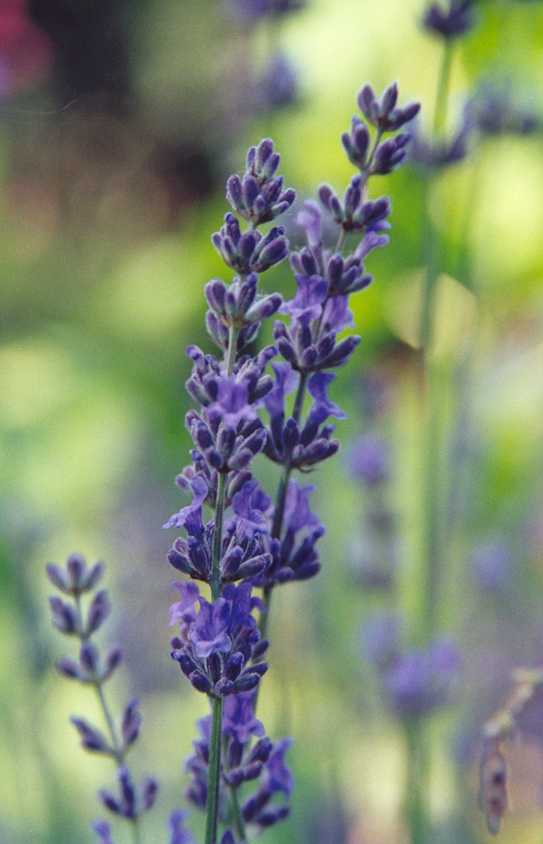
Ever wondered how to make your own infusions or infused oils?  Today, I'm going to show you a couple of ways to do so.  For this example, I'll be discussing how to make lavender-infused oil.  Please keep in mind that this is an infusion and NOT an essential oil.  You'll need: 
  • lavender buds, fresh or dried
  • jar w/lid, plus another jar or container
  • cheesecloth & rubber band, or a sieve
  • your choice of oil such as olive oil or jojoba
Method #1:
Fill your jar almost completely full (to the shoulder) with the lavender buds. (Hint: If you are using fresh, you will need to press them between some papertowels to get out the excess oil; there's a reason for this, I promise.  Also if you're using fresh, crush them up abit. This will help them release their oils into your carrier oil.)  Top the buds with your oil, filling the jar almost completely full; this limits the amount of air that can get in the jar and will prevent spoilage, etc.  Put the lid on tightly, and store in a warm, dark place for at least a week for maximum scent.  After the appropriate waiting period, remove the lid from the jar.  Either place the cheesecloth taut over the top of the jar, securing with the rubber band, or pour the contents of the jar into the sieve.  Allow the oil to drain into another jar or container; if you use the sieve, press down on the botanicals remaining in the sieve to extract the maximum oil (why waste, right?).   The oil should keep for several months. 

Method #2:
Add your lavender buds and oils to a crockpot.  Here you want to use 1/2 cup of lavender to 1 cup of oil (or close; you can eyeball if you want).  Put it on the absolute lowest setting (you don't want it to get above 100 degrees here), and let it infuse for 2-3 hours.  Remove from heat and let the oil cool completely.  Repeat as above with a sieve, etc.  

You can then use your infusion as a bath oil, moisturizer, in your hair, etc.

You can create an infusion from many flowers and herbs, including:
  • rose
  • mint
  • rosemary
  • sage
  • calendula
Keep in mind that if you are using fresh herbs, it helps to "bruise" them before adding to the infusion, as this will help them to release their natural oils.  Bruising is basically crushing, squeezing, etc the botanical abit (you want to bruise, not kill :).  
Also, it isn't always cheaper for a DIY infusion, depending on your location and what you have access to.  Rose infused oil, for example, can be very expensive, as you always want to be sure to use ORGANIC ONLY.  You don't want pesticides in your infusion. 

I have just launched Lavender Infused Oil in my Etsy shop now, for a limited time only. 

Natural Blessings - 
Candace

5.23.2010

What's the Deal with Virgin Coconut Oil?


Happy Sunday, all!  First, I apologize for no blog last week; technology attacked - 'nuf said.  But, without further delay, let's discuss the main differences between regular coconut oil & virgin coconut oil.

You see it in blogs, your friends tell you how great it is, & everybody's using it.  So you go to your local natural foods store to pick up some coconut oil for all of its touted uses.  But when you get there, you notice there is coconut oil and VIRGIN coconut oil, and why is it more expensive?  Okay, but what is the difference REALLY? Read on.

Regular coconut oil is refined, which means that the coconuts are broken into pieces and the coconut flesh is allowed to dry, Once dried, the flesh is hydraulically pressed at around 130 degrees to extract the coconut oil. The resulting oil is then passed through a filter press to produce the finished material, which then goes through a further process of refining, bleaching and deodorizing.

Virgin coconut oil is raw, virgin and unrefined.  To make virgin coconut oil, fresh, whole coconuts have the shell removed, then the flesh is milled to fine shreds and dried at a temperature not to exceed 100 degrees for about 2 1/2 hours. This helps in the evaporation of excess water which is prevalent in the flesh, but does not completely dry it out.  Once dried, the coconut is passed through a cold process oil press where the oil is separated from the coconut at a controlled temperature of less than 100 degrees.

The cold process extraction allows the oil to retain many of its benefits that are normally stripped from the oil during a standard refining process.  This is the most "true" form of coconut oil available.  While both oils have their applications, I normally opt to use for virgin coconut oil in my products, heating it only to the point of melting (coconut oil solidifies at room temperature). 

The great thing about this oil is you can use it straight, right out of the jar!  Virgin coconut oil has a light coconut scent, and can be very good for the hair, skin, and nails.  If you are like me & have fine, thin hair, you will likely find this oil a little heavy for your hair.  I love the smell, but with thin hair it's a little too much.  It makes a great treatment for hands & feet though.  This is an oil, so allow time for absorption before trying to walk around... no skating down the halls!  It is very mild, and thus, suitable for those with inflamed or sensitive skin.

You can buy virgin coconut oil at most health food stores, such as Whole Foods.  There are also many reputable online distributors, such as Mountain Rose Herbs.

I hope you have found this article useful.  Next week I'll be discussing the benefits of reservatrol for the skin.  Have a fabulous week, and be sure to let me know if there are subjects you would like to see me write an article about!

Natural Blessings,
Candace